

The Pixel Project was founded almost 17 years ago in 2009 and during our first two years, we launched several campaigns, programmes, and initiatives as part of figuring out what works (and what doesn’t) when it comes to effectively raising awareness and educating the person on the digital street about violence against women (VAW). One of the most enduring efforts to come out of this period of experimentation is a classic awareness-raising activity given a 21st century spin:
Interviews.
When we first began conducting interviews, our senior editor Crystal Smith made a suggestion that would become the seed of our Inspirational Interview series. Launched in 2010, it comprised a series of monthly blog interviews, which remains one of the major pillars of our social media-driven advocacy and educational work. As we grew as an anti-VAW organisation, our ever-expanding efforts to provide multiple platforms for people from all walks of life to speak out about VAW meant that we started including livestream interviews on YouTube which also help activists, allies, and survivors tell their stories and share their ideas with others first-hand.
And yet, our Inspirational Interviews series has remained the backbone of the journalistic side of our anti-violence against women work. Indeed, for over a decade and a half, the hundreds of Inspirational Interviews we have conducted and published have become a striking tapestry of ideas, stories, and calls-to-action from remarkable individuals, communities and allies that are at the front lines of bringing the change that is so desperately needed to end VAW.
For this article, our longtime senior editors embarked on a trip down editorial memory lane to delve into our archives and select the best and most thought-provoking Inspirational Interviews we have published over the years. This is the perfect opportunity for longtime Pixel Project supporters to see the big picture of our awareness-raising work in the form of interviews while newcomers will find this a great place to start learning more about anti-violence against women initiatives going on across the world.
It’s time to stop violence against women. Together.
Introduction by Regina Yau. Curated and compiled by Regina Yau and Crystal Smith.
Inspired to support The Pixel Project’s anti-violence against women work? Make a donation to us today OR buy our 1st poetry collection, Under Her Eye. All donations and net proceeds from book sales go towards supporting our campaigns, programmes, and initiatives.
The Best of The Pixel Project’s Inspirational Interviews #1: Dr Ang Jury, Chief Executive of Women’s Refuge – New Zealand
 Dr. Ang Jury is the chief executive of Women’s Refuge. She has worked in the domestic violence arena for over 20 years, beginning in the 1990s at Palmerston North Women’s Refuge. In addition, she has been instrumental in the development of cross-agency collaborations both regionally and nationally. Her history through the 1990s also involved teaching, researching, writing and speaking in areas of gender and domestic violence while completing doctoral research (an exploration of the role of shame within abusive relationships) at Massey University. When discussing how men and boys can help stop violence against women, she said: “Many of the opportunities for men and boys to contribute to culture change happen at home and in their immediate social groups — challenging sexist behaviour, challenging the normalisation of harmful gender roles, and challenging patterns of behaviour that are controlling or coercive is ultimately the most effective way to reduce men’s violence against women.”
The Best of The Pixel Project’s Inspirational Interviews #2: Annita Lucchesi, Executive Director of Sovereign Bodies Institute – Canada & USA
 Annita Lucchesi is the former executive director of Sovereign Bodies Institute, a non-profit research institute dedicated to building the capacity of Indigenous communities to respond to gender and sexual violence, and founded the Missing and Murdered Indigenous Women (MMIW) database. She is a Cheyenne descendant and a survivor of domestic and sexual violence and trafficking. Annita pursued a Ph.D. in geography at the University of Arizona, where she served on the advisory board for the university’s Gender Based Violence Consortium. In her Inspirational Interview, she spoke about why she founded the MMIW database, saying that there is “a fundamental disinterest in protecting Indigenous women and apathy towards the violence they experience. Indigenous women are also dually invisibilised and hypervisible—we are erased and silenced in media, professional and political spheres, and research, and yet also made hypervisible as sexual objects, criminals, addicts, and victims of violence. The database resists this apathy and in/hyper-visibility by striving to amplify the voices of missing and murdered Indigenous women daily, while also uplifting the work of Indigenous women leaders, organisers, artists and researchers, so that we can start representing ourselves for the full human beings we are.”
The Best of The Pixel Project’s Inspirational Interviews #3: Catherine Sealys, President of Raise Your Voice Saint Lucia – Saint Lucia
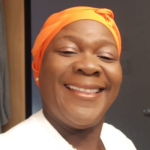 Catherine Sealys is one of the founding members of Raise Your Voice Saint Lucia (RYVSLU). She now serves as president and manages the day-to-day affairs of the organisation. Over the last eight years, RYVSLU has been the only vocal and visible NGO advocating publicly on issues affecting marginalised and vulnerable women and children in Saint Lucia. During her interview with The Pixel Project, she talked about why men play an important role in stopping violence against women: “We desperately need to encourage men to actively stand against violence against women while also interrogating how rigid gender roles negatively impact their own lives. Men are not born violent; they are conditioned by society’s image of masculinity. It is time that men question the image and break out of it. We cannot expect women to become empowered without also sensitising and transforming how men behave. They must work hand in hand.”
The Best of The Pixel Project’s Inspirational Interviews #4: Corinna Lim, Executive Director, Association of Women for Action and Research (AWARE) – Singapore
 Corinna Lim is the executive director of the Association of Women for Action and Research (AWARE) Singapore. Prior to joining AWARE as its first executive director in 2010, Corinna practised law for more than 10 years. She was also a co-founder and CEO of a technology business that services the legal industry. She has a Master’s in Public Administration (with focus on social entrepreneurship) from Columbia University and is a Fulbright Scholar. When speaking about toxic masculinity and how men and boys can help stop violence against women, she said: “Dismantling toxic masculinity will require a reimagining of the traits we associate with men. Government, parents, schools, workplaces, community groups all have a role to play in this. Yet while this is a societal problem, change will only come when individual men start speaking up. We urge men to, as much as possible, challenge and subvert these overly rigid ideas of masculinity and model healthier, more positive values, such as collaboration, care, empathy, emotional openness and respect.”
The Best of The Pixel Project’s Inspirational Interviews #5: Dr Debra Parkinson, Executive Director, Gender and Disaster – Australia
 Dr Debra Parkinson is a social researcher and former Executive Director of Gender and Disaster Australia (GADAus). Over the past decade, Dr Parkinson has made significant contributions to policy and public perception of increased violence against women in disasters and issues related to gender and emergency management. Her work since the 1980s has included research and advocacy related to women’s health, domestic violence, intimate partner rape, women’s unequal access to financial resources, superannuation, and the legal system. When discussing how men and boys can help stop violence against women, Dr Parkinson said: “To end violence against women, men and boys can embody and enact a different kind of manhood from the prescribed macho persona. Though hard to do, men can identify and reject their unearned privilege. Specifically in disasters, men can reduce gendered expectations of women to sacrifice their career or their safety for the family. They can point out that expectations of men in disasters to ‘protect and provide’ are unrealistic. Men can influence those around them that gender stereotypes are harmful, by their words and their actions.”
The Best of The Pixel Project’s Inspirational Interviews #6: Hawon Jung, Journalist – South Korea
 Hawon Jung is a journalist and author of Flowers of Fire: The Inside Story of South Korea’s Feminist Movement and What It Means For The World. Her coverage of South Korea’s #MeToo movement for Agence France-Presse was shortlisted in the Awards for Editorial Excellence by the Society of Publishers in Asia, and her book was chosen as one of the best books of 2023 by The Economist magazine. Her writings and commentary on women’s rights issues have been featured in the New York Times, Al Jazeera, and BBC, among others. In her interview with The Pixel Project, Jung shared some advice for journalists looking to cover the issue of violence against women: “Listen, report, and write with thought and care. In a place where violence against women is considered a taboo or non-issue, victims of such violence often pay a huge personal price for speaking out or publicly sharing their stories with journalists. Naturally, covering the issue takes more time, effort and energy for journalists and carries more risks for interviewees. But when done right, these stories can help make a real difference in society. So please listen to survivors attentively and try to capture their stories in ways that are not only thorough and accurate, but also respectful of both your sources and your readers.”
The Best of The Pixel Project’s Inspirational Interviews #7: Jaf Shah, Executive Director of Acid Survivors Trust International – Worldwide
 Jaf Shah started as a programme manager working on projects in South Africa for a charity whose patrons included Nelson Mandela and Desmond Tutu. He has implemented multiple British government- and UN-supported projects. He has worked on projects in Asia, Africa, South America, Eastern Europe and the Middle East. He was an award panelist for Stars Foundation Impact Awards which awards grants to not-for-profits which evidence impact in delivering protection and health of children in low-income countries. When asked about how we can bring about an end to violence against women, he said: “I believe to bring about an end to violence against women requires a major change in attitudes and behaviour across all levels of society, at an individual, family and community level. However, we have a responsibility to challenge government and states to take a leading role in its obligation to end violence against women. This means holding governments to account by passing laws, enforcing laws and running wide-scale educational programmes from an early age to address violence against women.”
The Best of The Pixel Project’s Inspirational Interviews #8: Jenni Tuominen, Managing Director, Monika-Naiset Liitto Ry – Finland
 Jenni Tuominen is the Managing Director of MONIKA (Multicultural Women’s Association, Finland), a nationwide multicultural women’s non-government organisation (NGO) that promotes the equality and inclusion of immigrant women in Finland and prevents violence against women. She has worked for over 17 years to prevent violence and discrimination against women, with a focus on migrant women. She has experience in establishing and organising low-threshold and crisis services for women, including victims of human trafficking and honour-related violence. When asked how violence against women can be eradicated, she said: “We need to invest in improving the equality of women and increasing the social participation of women around the world. Through these improvements, we can move towards eliminating violence against women. Lately there has been a global backlash to women’s rights, but it won’t stop us — it will empower us to keep taking action.”
The Best of The Pixel Project’s Inspirational Interviews #9: Dr Kemi DaSilva-Ibru, Founder of Women at Risk International Foundation (WARIF) – Nigeria
 Dr Kemi DaSilva-Ibru, founder of Women at Risk International Foundation (WARIF) in Nigeria, is a health care specialist, public health physician, and researcher who is dedicated to improving the lives of women and girls through her medical practice, social activism, and public advocacy against sexual and gender-based violence. When speaking about whether it is feasible to end violence against women, Dr DaSilva-Ibru said: “At our present rate of change, it will take nearly a century to achieve gender parity. For us to change this narrative and build a world with the eradication of violence against women and girls would entail an all-inclusive and collaborative effort by all global leaders, ensuring gender parity is present and enforcing this in all education, health, politics and across the economic sectors.”
The Best of The Pixel Project’s Inspirational Interviews #10: Khrystyna Kit, Chairwoman of the Ukrainian Women Lawyers Association (JurFem) – Ukraine
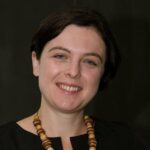 Khrystyna Kit is the founder and chairwoman of the Ukrainian Women Lawyers Association “JurFem.” She is a lawyer, human rights defender working with cases of gender-based violence – in particular sexual violence – expert group coordinator on conflict-related sexual violence (CRSV) at the Prosecutor General’s Office, and co-author of educational and training programmes for legal communities on the topic of sexual violence, including Conflict Related Sexual Violence (CSRV). When talking about how violence against women can be eradicated, she said: “I’m not sure we can stop violence against women forever. What we can do and are responsible for is the creation of an effective system of countermeasures and protection, safe cities and infrastructure, and an effective response system that women and girls can trust.”
The Best of The Pixel Project’s Inspirational Interviews #11: Maanda Ngoitiko, Executive Director of the Pastoral Women’s Council (PWC) – Tanzania
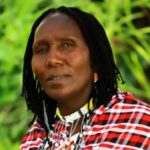 Maanda Ngoitiko is co-founder and Executive Director of the Pastoral Women’s Council (PWC) in Tanzania. As a Maasai woman and grassroots leader, she has been instrumental in increasing the agency of tens of thousands of indigenous pastoralist and agro-pastoralist women and girls to know and exercise their rights. She is recipient of the Paul K. Feyerabend Prize and was nominated for The Guardian International Development Achievement Award. When speaking about why she joined the movement to end violence against women, she said: “When my own sister was forced out of school to get married, I took her place. I went to school with 28 male students and only 1 other girl. Sadly, she was also beaten and forced into early marriage. I realised that this was my life prospect and decided that as a community we needed to change. This is what inspired me to dedicate my life to defend our rights as women, and subsequently to co-found Pastoral Women’s Council.
The Best of The Pixel Project’s Inspirational Interviews #12: Noorjahan Akbar, Co-Founder of Free Women Writers – Afghanistan
 Noorjahan Akbar is an outspoken women right’s advocate and author from Afghanistan. She has worked with several Afghan and global organisations focusing on women’s empowerment and ending gender-based violence and led nation-wide campaigns and protests in defense of human rights. She currently runs Free Women Writers, a collective of activists and writers in Afghanistan and the diaspora advocating for gender equality and social justice. Noorjahan has been recognised for her efforts for gender equality at home and internationally and published on Al Jazeera and The New York Times, among other outlets. She said: “Women’s rights organisations are still among the least funded organisations in the world. This often leads to women’s organisations competing over little resources instead of working together to fight challenges. Let’s work together to change this. Working for women’s rights is dangerous, tiring, and long term. We can’t expect activists to continue to put their mental health and well-being and their livelihoods on the line in order for women to have more rights. If you can donate 5 dollars do it. Every small donation goes a long way because most women’s rights organisations are frugal with their resources. Do your research and support organisations that have brought about change in your local community as well as around the world.”
The Best of The Pixel Project’s Inspirational Interviews #13: Payzee Mahmod, Campaigner for IKWRO – Women’s Rights Organisation – Kurdistan and the United Kingdom
 Payzee Mahmod is a campaigner for IKWRO – Women’s Rights Organisation. She is a survivor of female genital mutilation (FGM) and child marriage who lost her sister Banaz in a tragic “honour” killing. A Kurdish immigrant raised in London, Payzee campaigns alongside IKWRO to tackle harmful practices. She has reached international audiences and has spoken widely on the need for changes to the laws surrounding child marriage and “honour” based abuse in her TEDX talk (watched nearly a million times, across radio, television, and newspapers, including The Sunday Times and the BBC). Payzee campaigns for better education, training, and legislation to finally make child marriage a crime. When asked how society can end violence against women, she said: “I believe this is something that requires every member of society to play a role in to achieve. It isn’t enough to rely on one area of society to do the work. Specialised services like IKWRO are crucial for women and girls. However, we also need schools, healthcare providers, the police, and all agencies to be aware of these issues, to understand how to prevent and tackle them and ultimately ensure support is always available for those at risk.”
The Best of The Pixel Project’s Inspirational Interviews #14: Rujuta Teredesai Heron, Co-founder of Equal Community Foundation – India
 Rujuta Teredesai Heron has been working in the development sector for around 10 years. She specialises in programme management, fundraising, and communications. Having studied English Literature and Print Journalism, she is a trained journalist. She joined the Equal Community Foundation because she has tremendous faith in the concept of engaging boys and men as a part of the solution. She is currently focusing on scaling the work of Equal Community Foundation across India. When asked what might help end violence against women for good, she said, “Without trying to oversimplify it, we can end violence against women for good if: we consistently invest in prevention as well as post intervention; we engage boys and men along with women and girls; we focus on addressing the root causes and aim for systemic change.”
The Best of The Pixel Project’s Inspirational Interviews #15: Tania Rashid, Journalist – Bangladesh and USA
 Tania Rashid is a freelance correspondent and multimedia journalist working in print and photography, and the producer of the short documentary, “A Crime Unpunished: Bangladeshi Gang Rape.” She has hosted and produced films for Vice on HBO, Vice News, Al Jazeera English, and CNN International. She was one of the first reporters on the ground when the 9-story garment factory Rana Plaza collapsed in Savar, Bangladesh. She has covered human interest stories for Vice News in Bangladesh on gang rape, the lives of sex workers, and the effects of toxic tanneries on its labourers, and also hosted a piece for Al Jazeera’s 101 East on child marriage. In response to a question about ways we can end violence against women, she said: “I think we can end violence against women, but it starts with holding men accountable. They need to know what they are doing is wrong, and they need to support women. We need men as our allies, and until that happens I do not see anything changing.”
The Best of The Pixel Project’s Inspirational Interviews #16: Tony Mwebia, Executive Director of the Men End FGM Foundation – Kenya
 Tony Mwebia is the founder and executive director of the Men End FGM Foundation. He started this online and offline campaign in Kenya to rally men and boys to join the quest to eradicate female genital mutilation (FGM), child marriage, and other forms of sexual and gender based violence (SGBV). Additionally, Tony is a gender equality advocate and writer for online and offline publications. During his Inspirational Interview. When asked how we can end violence against women, he pointed out: “We can completely eradicate VAW by actively engaging all genders in our interventions. VAW is mainly driven by patriarchy and gender norms that discriminate against women and girls. By engaging everyone in our interventions and conversations, we ensure that we move together as a society and no one is left behind. When everyone understands, then we will be able to end VAW sooner. This is our main goal at Men End FGM, where we ensure that men are not left behind in the conversations around ending FGM, child marriage and other forms of VAW.”
Photo Credits:
- Dr Ang Jury – Courtesy of Dr Ang Jury
- Annita Lucchesi – Courtesy of Annita Lucchesi
- Catherine Sealys – Courtesy of Catherine Sealys
- Corinna Lim – Courtesy of Corinna Lim
- Dr Debra Parkinson – Courtesy of Dr Debra Parkinson
- Hawon Jung – Courtesy of Hawon Jung
- Jaf Shah – Courtesy of Jaf Shah
- Jenni Tuominen – Courtesy of Jenni Tuominen
- Dr Kemi DaSilva-Ibru – Courtesy of Dr Kemi DaSilva-Ibru
- Khrystyna Kit – Courtesy of Khrystyna Kit
- Maanda Ngoitiko – Courtesy of Maanda Ngoitiko
- Payzee Mahmod – Courtesy of Payzee Mahmod
- Rujuta Teredesai Heron – Courtesy of Rujuta Teredesai Heron
- Suvekchya Rana – Courtesy of Suvekchya Rana
- Tania Rashid – Courtesy of Tania Rashid
- Tony Mwebia – Courtesy of Tony Mwebia