
Welcome to The Pixel Project’s Fathers for Pixels blog interview series!
We created this interview series:
- To acknowledge the vital role dads play in families, cultures and communities worldwide.
- To showcase men from different walks of life who are fabulous positive non-violent and non-sexist male role models.
- To provide dads worldwide a positive platform to share ideas about stopping sexism, misogyny, and violence against women and girls.
This year, participating dads talk about parenting in the age of online misogyny and violence against women and how fathers and father figures can teach, mentor, and guide their sons in navigating the influence of the “manosphere” among their peers and the rise of online “rape academies” where men congregate to learn how to rape and sexually assault women and girls.
Our fifth and final Fathers for Pixels interview of 2026 is with Todd Minerson from Canada.
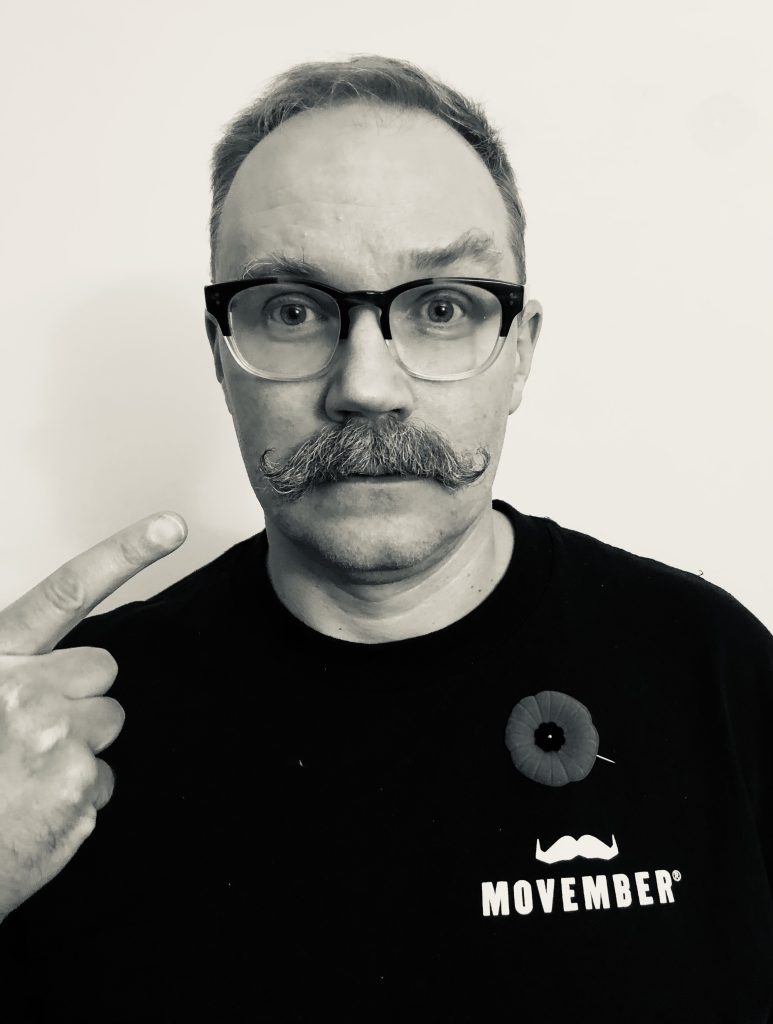
Picture courtesy of Todd Minerson.
The Dad Bio:
Todd Minerson wears many hats, but the most important one is as father to his 20 year-old son and 15 year-old daughter. They keep him humble, challenged, loved, learning, vulnerable, and current up to last year’s cool things for young folks. In his professional life he has spent close to 30 years working on gender justice and equity issues; on HIV/AIDS, housing vulnerability, gender-based violence prevention; and now men’s health as Country Director for Movember Canada.
 1. What is the most challenging thing about being a dad in the age of misogyny and violence against women that are now turbocharged by technology and the internet in the form of the “manosphere” and online “rape academies”?
Sadly, misogyny and violence against women are not new but the ecosystem around them has changed dramatically. For me, as a dad, the most challenging element today is the intersection of access, speed and abject commercialism in an online world with few consequences. Those spaces that prey upon young people’s universal need to feel a sense of belonging and to make sense of the world they are growing up in have become vectors for how to generate and manipulate views and clicks for money, with zero regard for the impact on young people’s lives. The normalisation of violence against women and girls is not only an extension of patriarchal dominance, but a commercial accelerator with no guardrails.
2. How do you think fathers and father figures can help young men and boys navigate pressure from their male peers to join these easily and widely accessible toxic male influencers, communities, and platforms?
I think about this a lot as a dad to a young man and in my professional life at Movember. To me there are a couple of very important pieces here, starting with deep listening about where boys are at today, what their fears and challenges are, and how they may or may not be hopeful for their future. Deep listening in real life is the essential starting point, and it takes effort, love, and intention.
For me the next piece is teaching critical learning skills at the earliest age-appropriate moments, consistently and repeatedly. What are you seeing, who is serving it to you, what’s in it for them, what deeper need does it resonate for you?
Lastly, I don’t know if fighting these influencers directly is the answer (albeit maybe a policy and regulation fight is needed). Searching, creating and offering better narratives is the path forward.
3. What do you think fathers can do to help their daughters stay safe both online and offline given that high levels of online violence against women facilitates offline violence against girls in schools and universities?
It is similar to the effort with young boys – listen deeply, teach critical media literacy, and seek positive spaces. But there are additional efforts as well for me. Teaching rights and standards to our girls that they are entitled to, helping (unfortunately still) plan for physical and sexual safety. But probably the most important thing (and in hindsight equally important for boys) is setting the example you want to see as a father and a partner in life. Show emotions, be vulnerable, do the care and domestic work, and so forth.
4. For fathers who don’t know where to start when it comes to guiding their children through this proliferation of misogyny, sexism, toxic masculinity, and violence against women online, what is the first step that you suggest they take?
Starting is maybe the hardest part, but unless you have lived as a hermit for the past 25 years, ignorance of the problem is not an excuse anymore. Be brave, do the work, get comfortable making mistakes. Nobody is perfect, and that should not be the goal here. It is the effort that counts; honest, intentional, and consistent. It can make every difference in the world, for your kids and yourself, to be honest. I still feel like Jon Snow from Game of Thrones Season 3 – “I’m Jon Snow and I know nothing”.
5. Finally, what do you think can be done to eradicate these platforms and communities whose aims are to nurture and proliferate toxic masculinity, misogyny, and sexism proliferate among men and boys?
Eradication may be a near impossible task, given there will always be a platform willing to sacrifice ethics for money. I also don’t think the long-term responsibility for this rests on the shoulders of young people, through things like social media bans. They may limit harm in the short-term, but as we hear from youth in our work: you guys are the adults – fix it for us! Protect us! Don’t ban us from the benefits of connection and learning and culture and creativity at the same time.
The biggest responsibility for me is on corporations and governments to recognise the full sum of the societal costs here, legislate harm, and make meaningful accountability through consequences.