
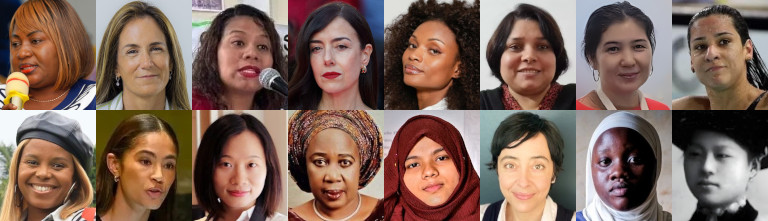
Today is the first day of the 16 Days of Activism against Gender-based Violence 2026 campaign and The Pixel Project is kicking things off with our 11th annual list of 16 female role models fighting to end violence against women in their communities. The intent of this list is simple: to highlight the good work of the heroines of the movement to end violence against women wherever they are in the world. The women in this year’s list hail from 16 countries and 4 continents.
Many of these outstanding women have shown that it is possible to transform the personal pain that comes out of facing gender-based violence into positive action to stop violence against women, empower themselves, and show other survivors that it is possible to move forward with dignity and happiness. They have refused to let bitterness and pain get the better of them, opting to stand up for themselves and for other women and girls instead.
Others on this list may not have experienced gender-based violence inflicted on themselves but they have stepped up to do what is right: to speak up for women and girls who cannot do it for themselves, sometimes at great personal risk. All this requires immense courage, generosity of spirit and a strong enduring heart.
Without further ado, here, in alphabetical order by first name, is our 2026 list of 16 female role models. We hope that these women will be an inspiration to others to get involved with the cause. To that end, we hope you will generously share this list via Facebook and Instagram to give these extraordinary 16 women and their work a moment in the sun.
It’s time to stop violence against women. Together.
Note: Information for all role model profiles is sourced via online research and is based on one or more news sources, articles and/or The Pixel Project’s own interviews with them. The main articles/reports from which these profiles have been sourced can be directly accessed via the hyperlinked titles. Please do click through to learn more about these remarkable women.
Written, researched and compiled by Regina Yau
Inspired to support The Pixel Project’s anti-violence against women work? Make a donation to us today OR buy our 1st poetry collection, Under Her Eye. All donations and net proceeds from book sales go towards supporting our campaigns, programmes, and initiatives.
Female Role Model 1: Annick Nonohou Agani – Benin
 ANNICK NONOHOU AGANI is an award-winning midwife and human rights activist who founded the Network of Patient-Friendly Caregivers (Réseau des Soignants Amis des Patients) and coordinates an initiative to reduce obstetric and gynecological violence in French-speaking Africa. She campaigns for childbirth practices that respect human rights in collaboration with Amnesty International. She said: “My mother suffered obstetric violence […] In the end, my mother gave birth to my brother and they both survived. But her mistreatment by the clinic workers had a lasting impact on me… I told myself that whatever I became later in life, I would defend the rights of women who give birth.”
Female Role Model 2: Carmen Correa – Bolivia
 CARMEN CORREA is the CEO of Pro Mujer, a social enterprise that has worked to promote gender equality and stop violence against women in Latin America for over thirty years. Since 2022, she has spearheaded Pro Mujer’s social impact programmes which have empowered Bolivian women. These include healthcare services, skill-building initiatives, helping women attain financial independence, and ensuring abused women have access to help. Correa said: “We provide counseling in five Latin American countries, have protocols for gender-based violence cases in our clinics and during the COVID-19 pandemic, we even established the first free hotline in Bolivia to address gender-based violence cases.”
Female Role Model 3: Carolina Calle – Colombia
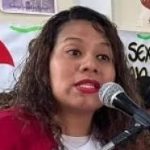 CAROLINE CALLE is one of the leaders of the Colombian sex workers’ trade union, ASTRASEX as well as the executive director of Calle Siete, a sex workers’ rights organisation. She works together with her community, other sex worker organisations, feminist allies, and lawmakers to advocate for full labour rights for sex workers as well as stopping violence against women. She said: “It is important to make visible the violence against women, and in the case of my struggle, the violence exercised daily against those who practice sex work […] like other women, we seek dignified and fair conditions to exercise our work.”
Female Role Model 4: Cecilia Suárez – Mexico
 CECILIA SUÁREZ is a Mexican actress who has championed the human rights of women and girls through her work in film and television. As a women’s human rights activist, she works with the European Union and United Nations to campaign against violence against women with a focus on femicide and online violence against women. As a UN Global Advocate, she has most recently spoken about the major increase in online violence against women and girls. She said: “The Internet has become a training ground for hate against women and machismo. […] There is exponential growth in anti-women’s rights groups as well as new technological methods that reinforce misogynistic ways of thinking. This is why we desperately need a legal framework to regulate the internet in all its forms.”
Female Role Model 5: Djabu Balde – Guinea-Bissau
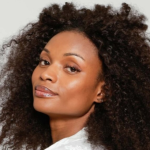 DJABU BALDE is a Guinean-Spanish actress and model whose autobiography, “Entre dos Madres” (Between Two Mothers) has become a worldwide awareness campaign against female genital mutilation (FGM). Between the ages of 3 – 4, she was subjected to FGM and remembers not just the horrific FGM ceremony but the bleeding and agony she endured afterwards. In an interview with Atalayar, she stated that her book “is a tool, as it is now time to spread and consolidate this awareness against something that remains a brutal assault on girls, a clear case of extreme child abuse.”
Female Role Model 6: Dur e Shawar – Pakistan
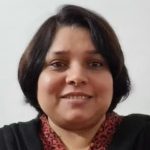 DUR E SHAWAR is the vice president of the Pakistan Workers Federation (PWF). Through this role, she advocates for enhanced opportunities, policies, and recognition for women workers in Pakistan and campaigns for the rights of women in the informal economy as well as gender equality within the PWF. In an interview with Human Rights Watch, she said: “Gender-based Violence is not confined to physical harm; it’s a pervasive violence that shatters education, health, income, inclusion, decent work, opportunities, and decision-making. Gender-based violence at work is one of the most significant hurdles for women in the workforce, and it’s disheartening that this issue often remains unspoken and unaddressed.”
Female Role Model 7: Jipara Turmamatova — Krygyzstan
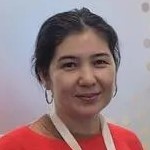 JIPARA TURMAMATOVA is UNICEF Kyrgyzstan’s gender officer. Her work focuses on eliminating forced marriage as well as online safety for girls via UNICEF’s Spotlight Initiative. Prior to this, she was a UN Women project coordinator who focused on championing the rights of rural women in Kyrzygstan. When discussing her work to keep girls in STEM safe, she said: ‘When I interact with girls, I see such great power, drive and potential, and I see that safety is a basic precondition for them to thrive. When we work in areas such as STEM … gender-based violence (GBV) is seen as a side or unimportant component that can only be implemented if resources and time allow. It’s never the priority and it’s never one of the core components. That’s the biggest challenge: explaining that bringing girls to STEM opens up new risks, for example technology-facilitated GBV.”
Female Role Model 8: Joanna Maranhão – Brazil
 JOANNA MARANHAO is an activist and Network Coordinator at Sports & Rights Alliance, a coalition that includes human rights organisations and trade unions collaborating to advocate for human rights in sports. A former Olympian swimmer, she is a survivor of sexual abuse in sports who led a successful campaign to expand Brazil’s statute of limitations to allow survivors of child sexual abuse more reporting time. She said: “My advocacy journey is part of my healing journey. Because I was 21 when I publicly disclosed my case, the statute of limitations had already expired, and I was unable to press charges. I ended up being sued by [my abuser] which was a nightmare and so hard for me to understand. When I finally felt ready to share my story, justice was not there for me. Adding on to that the total negligence of Brazilian sports governing bodies back then, I had no choice but to do something.”
Female Role Model 9: Karabo Mokoena – South Africa
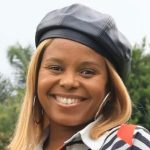 KARABO MOKOENA is the founder of Black Mom Chronicles and a South African women’s rights activist who focuses on addressing and eliminating obstetric violence against Black South African women. Her advocacy against obstetric violence began as an alumna of the “Embrace” movement that champions maternal health equity in South Africa. She said: “There are frequent reports of mothers being shouted at, shamed, or spoken to harshly while in labour. These experiences often go unreported. Many women carry this trauma in silence.” She is calling for a reform of the maternity care system of the country and wants obstetric violence formally recognised, and accountable and respectful maternity care implemented across healthcare facilities.
Female Role Model 10: Lucina Di Meco – Italy
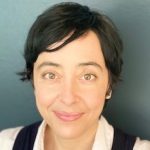 LUCINA DI MECO is a political activist who has experienced online violence against women firsthand in the course of her work. Disgusted by the lack of response from social media companies when she reported the abuse, she began her advocacy work against the online abuse of women and girls. In her report #ShePersisted: Women, Politics & Power in the New Media World, Di Meco interviewed female politicians, activists and journalists worldwide about their social media experience and discovered that they faced disproportionately higher rates of online abuse compared to their male peers. She also coined the term “gendered disinformation” — “the spread of deceptive or inaccurate information and images against women political leaders, journalists and female public figures.”
Female Role Model 11: Mariama Seydi – Senegal
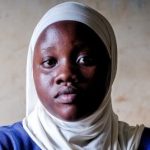 MARIAMA SEYDI is an 18-year-old survivor of female genital mutilation (FGM) and high school student in the Sédhiou region in Southern Senegal. She works with Amnesty International to advocate for the elimination of FGM. She said: “I was cut. We are told that it is a custom, but sometimes I wonder if our ancestors would not be fighting alongside us today against female genital mutilation if they knew all the consequences of this practice. It hurts me to know that I was cut and that there will still be girls who will go through this too. In our area, there is a lot of violence against girls. The violence I see around me includes female genital mutilation and early and forced marriages. Harassment is also very common. Amnesty’s training about GBV has enabled me, as a girl, to aspire to help and defend voiceless people who are unable to defend themselves. After my training sessions, I often share everything I have learned with my friends.”
Female Role Model 12: Precious Modupe Ojo – Nigeria
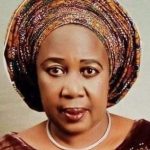 PRECIOUS MODUPE OJO is a community leader, traditional chief, and grassroots activist who advocates for women’s and girls’ rights. After Nigeria ratified C190, she participated in training sessions which prepared her and her fellow participants to put into practice C190’s extensive provisions to end gender-based violence and harassment (GBVH) in the workplace. As a vendor in the Mile 12 food market in Lagos, she galvanised other vendors to make the market a safe place. She said: “As a result of the practices and activities conducted to combat GBVH, the Mile 12 market has seen an increase in reporting of GBVH incidents, arrests, and prosecutions, with six perpetrators currently facing rape trials in the court in Lagos State. [In addition] to incidents of GBVH being reduced significantly, women were included in more leadership roles, and the market became a safer place for everyone.”
Female Role Model 13: Rima Sultana Rimu – Bangladesh
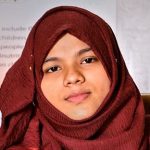 RIMA SULTANA RIMU is a member of the Young Women for Leadership (YWL) network in Cox’s Bazar, Bangladesh, a programme of the Global Network of Women Peacebuilders. She educates young women about their rights using theatre and radio broadcasts. She also runs workshops on women and youth participation in peacebuilding. She made the education of Rohingya girls her mission, saying: “Most of the women and girls in the Rohingya community can’t read or write, so they cannot fully understand their rights. Many of them are forced to leave school at a very young age. It means they can be dismissed as uneducated and, if they are facing harassment or violence, they may not feel they can report it or seek justice. […]Teaching girls how to read and write is one of the biggest ways I can make a difference.”
Female Role Model 14: Sinead Bovell – Canada
 SINEAD BOVELL a futurist, entrepreneur, and advocate working at the intersection of technology and ethics. One of the major focus areas of her work is tackling technology-facilitated violence against women and girls, including advocating for equal access to education and digital tools. She said: “Technology is far from neutral. Gender-based violence, one of the most pervasive human rights violations in the world, has extended to online spaces where it’s amplified and evolving in overt and covert ways. From non-consensual deepfake images, to medical AI systems trained on historical datasets that excluded women entirely, to the disproportionate abuse women face in online spaces, the challenges are vast. But so too are the solutions.”
Female Role Model 15: Sophia Huang Xueqin – China
 SOPHIA HUANG XUEQIN is one of the leading figures behind China’s #MeToo movement and a journalist who has been imprisoned by the Chinese government for her work in reporting on gender-based violence and human rights violations in China and held under extreme conditions that have severely damaged her health. Notably, her reporting on the sexual harassment of a university student led to nationwide reforms by China’s ministry of education. As Ms. Huang’s release date comes closer, Aleksandra Bielakowska, the Advocacy Manager for Reporters Without Borders Asia-Pacific stated: “Despite sustained persecution, Sophia Huang Xueqin embodies the spirit of journalism by transforming the injustices she has witnessed into stories that can drive real change. Her case stands out for her astounding ability to speak truth to power, but fits into a terrible pattern: the Chinese Communist Party systematically seeks to silence hardworking, trustworthy journalists for exposing the darkest aspects of life in Chinese society.”
Female Role Model 16: Tien Fuh Wu – China and the United States of America
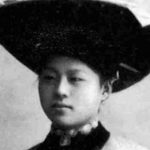 TIEN FUH WU was a pioneer in the anti-human trafficking movement in San Francisco, California. As a child, she was sold off by her father into domestic slavery as a mui tsai (a child servant). After being rescued, she was sent to San Francisco’s Presbyterian Mission Home for girls where she learned to read and write and eventually went to college. After graduation she began her lifelong work as a translator and human trafficking activist who rescued Chinese immigrant women and girls in San Francisco from indentured servitude and slavery. Julia Flynn Siler, author of The White Devil’s Daughters: The Women Who Fought Slavery in San Francisco’s Chinatown, writes: “Wu and other staffers from the home crisscrossed the state and the country for decades, aiding vulnerable women and speaking out against the slave trade.[…] The work undertaken by the Mission Home staff often included repeated court appearances, since traffickers often fought to reclaim what they regarded as their human property. Wu served as a translator many times over the years, in court and in dealings with immigration officials.”
Photo Credits:
- Annick Nonohou Agani –– From “Annick Nonohou Agani: “I defend the rights of women who give birth in Benin”” (amnesty.org)
- Carmen Correa – From “Meet 5 changemakers fighting against gender-based violence” (World Economic Forum)
- Caroline Calle – From “Champions of Change: Activists Leading the Fight Against Gender-Based Violence at Work” (hrw.org / Carolina Calle)
- Cecilia Suárez – From Wikimedia Commons (Pedro J Pacheco – Own work, CC BY-SA 4.0, https://commons.wikimedia.org/w/index.php?curid=183775437, via Wikimedia Commons
- Djabu Balde – From Instagram (@djabu_acting)
- Dur E Shawar – From “Champions of Change: Activists Leading the Fight Against Gender-Based Violence at Work” (hrw.org / Dur E Shawar)
- Jipara Turmamatova – From “Meet the activists working to end digital violence against women and girls” (Spotlight Initiative)
- Joanna Maranhão – From From “Champions of Change: Activists Leading the Fight Against Gender-Based Violence at Work” (hrw.org / Joanna Maranhao)
- Karabo Mokoena – From “Childbirth Should Never Cost a Woman Her Dignity – Karabo Mokoena Speaks Out on Obstetric Violence” (News24.com/Karabo Mokoena)
- Lucina Di Meco – From “Lucina Di Meco: Gender-based Violence Technical Advisor, UN Population Fund (UNFPA)” (unaca.org)
- Mariama Seydi – From “We are setting an example”: Meet five activists advancing women’s and girls’ rights in West Africa” (Amnesty International)
- Precious Modupe Ojo – From “Champions of Change: Activists Leading the Fight Against Gender-Based Violence at Work” (hrw.org / Precious Modupe Ojo)
- Rima Sultana Rimu – From “From where I stand: “Teaching girls how to read and write is one of the biggest ways I can make a difference” (UN Women/Mahmudul Karim)
- Sinead Bovell – From “Meet the activists working to end digital violence against women and girls” (Spotlight Initiative/UN Photo / Loey Felipe)
- Sophia Huang Xuiqin – From China File
- Tien Fuh Wu – From “Chinatown Street to Be Named for Rescuer of Trafficked Girls” (KQED / Public Domain)
