
Welcome to The Pixel Project’s Fathers for Pixels blog interview series!
We created this interview series:
- To acknowledge the vital role dads play in families, cultures and communities worldwide.
- To showcase men from different walks of life who are fabulous positive non-violent and non-sexist male role models.
- To provide dads worldwide a positive platform to share ideas about stopping sexism, misogyny, and violence against women and girls.
This year, participating dads talk about parenting in the age of online misogyny and violence against women and how fathers and father figures can teach, mentor, and guide their sons in navigating the influence of the “manosphere” among their peers and the rise of online “rape academies” where men congregate to learn how to rape and sexually assault women and girls.
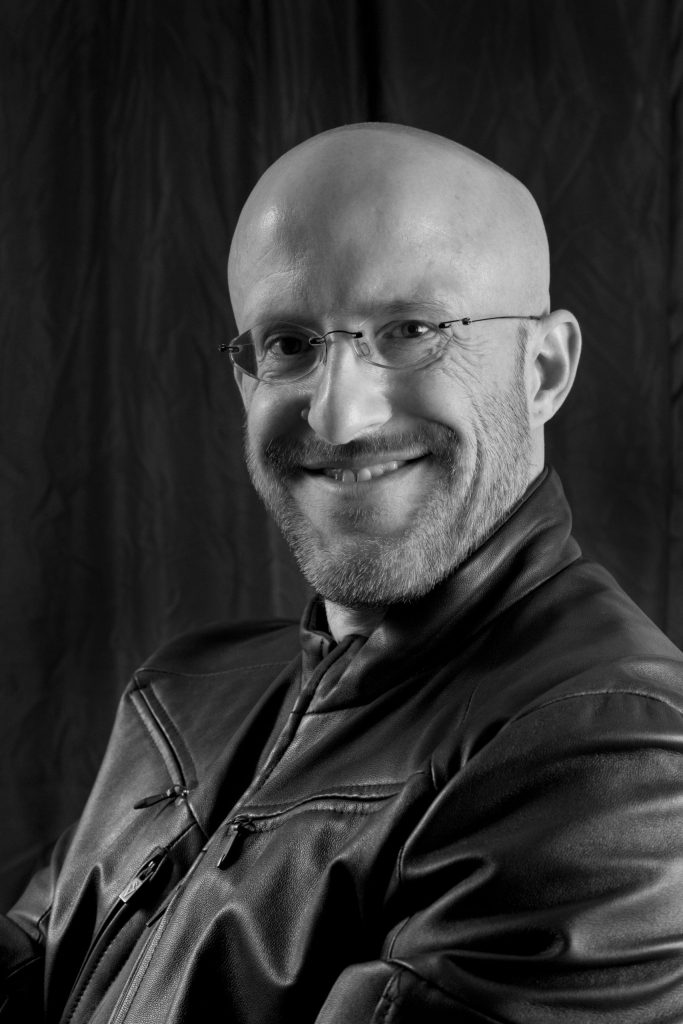
Our second Fathers for Pixels interview of 2026 is with Jim C. Hines from the U.S.
Picture courtesy of Jim C. Hines.
The Dad Bio:
Jim C. Hines is a former crisis counsellor and rape awareness educator. He’s also the author of 20 published SF/F novels, including Kitemaster, the Goblin Quest trilogy, the Janitors of the Post-Apocalypse trilogy, and more. He won the 2012 Hugo Award for Best Fan Writer. His latest novel is Slayers of Old. He lives in mid-Michigan and is a father/stepfather to four amazing children.
 1. What is the most challenging thing about being a dad in the age of misogyny and violence against women that are now turbocharged by technology and the internet in the form of the “manosphere” and online “rape academies”?
One challenge for me as someone who grew up in the 80s and 90s was realising I needed to talk to my kids about things like blocking and reporting, dealing with trolls and harassment, and protecting yourself online. Limiting screen time and keeping them off social media until a certain age doesn’t change the fact that most kids will eventually get out there and experience the full ugliness of the online world. I know how upset I can get about People Being Abusively Wrong on the Internet. How much harder is it to be a kid coming across that kind of nastiness, let alone being targeted by it?
The good thing is that giving them tools to protect themselves online—things like setting boundaries, especially in their own spaces—can also carry over to help them protect themselves in person.
2. How do you think fathers and father figures can help young men and boys navigate pressure from their male peers to join these easily and widely accessible toxic male influencers, communities, and platforms?
I would say the first step is to be a healthier role model. Let kids see you treating other people with respect. Model better ways of coping with disappointment and hurt and anger.
Second, talk to them. Ask if they heard about the CNN story about Motherless and what they thought. Ask what the kids at school are saying about it. It would be easy to get caught up in numbers: “It wasn’t 62 million men it was only a few thousand,” and so on. Talk instead about the fact that this stuff exists at all and how messed up that is. Find out what they’re hearing from their peers and help them learn how to push back when appropriate.
3. What do you think fathers can do to help their daughters stay safe both online and offline given that high levels of online violence against women facilitates offline violence against girls in schools and universities?
- Be a safe person for them to come to. Build trust so that if and when they encounter that violence, they know they’re not alone and they have someone who’s there for them.
- But also, talk to them up front about what’s out there rather than waiting for them to come to you after the fact.
- Teach them to trust themselves, and to listen to that gut feeling when things are off.
- For myself, I wanted my kids to have some self-defence training, as much for the verbal and emotional aspects as the physical. (Learning to use their voice without fear; learning confidence and trust in themselves, etc.)
None of this should be taken as putting the responsibility or blame on victims of violence. Whatever someone does or doesn’t do, that blame falls squarely and entirely on the perpetrator.
4. For fathers who don’t know where to start when it comes to guiding their children through this proliferation of misogyny, sexism, toxic masculinity, and violence against women online, what is the first step that you suggest they take?
Listen to women. Listen to them when they talk about the prevalence of rape and domestic violence and sexual abuse. Listen to them about the reality of day-to-day sexism and harassment.
Read. One fairly simple place to start is RAINN’s Get the Facts About Sexual Violence page.
Let go of defensiveness. It’s hard, in the beginning, to see statistics about how the vast majority of these crimes are committed by men, or to talk about things like “toxic masculinity.” But talking about toxic masculinity isn’t saying that men are bad or evil, any more than talking about air pollution means that all air is bad.
5. Finally, what do you think can be done to eradicate these platforms and communities whose aims are to nurture and proliferate toxic masculinity, misogyny, and sexism proliferate among men and boys?
I would love to see us do a better job holding platforms accountable for content that is illegal and/or violates their terms of use. It seems like the energy some places put into flagging and hiding and deleting LGBTQ+ content might be better spent doing something about harassment and hate speech and so on.
I remember one major site years ago that hosted pro-rape content under the banner of free speech. After a fair amount of public outcry and pushback, they adjusted some policies, perhaps realising they didn’t want their brand to be the “pro-rape website.”
Basically, speak out. Push back. Be heard. If you have a platform and/or privilege in these conversations, use it.