
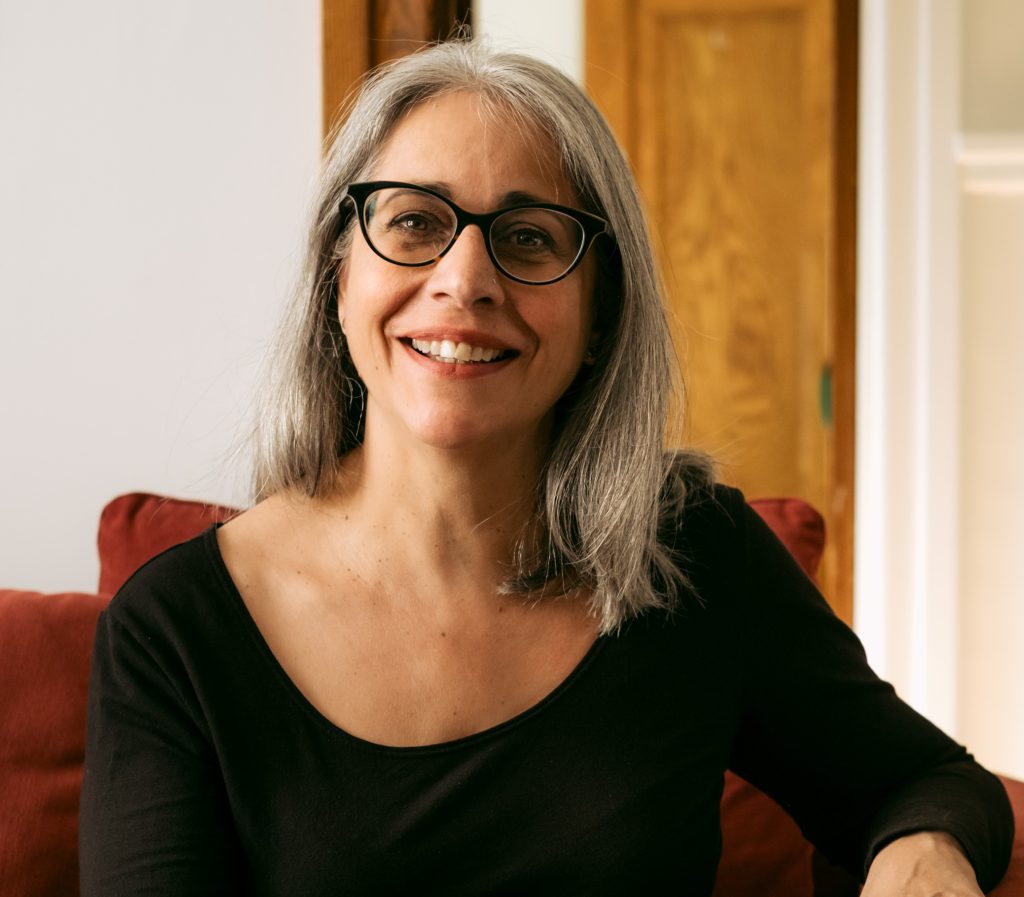
Welcome to Part 1 of our June 2026 Inspirational Interview with Anuradha Dugal, Executive Director of Women’s Shelters Canada.
Anuradha is a passionate advocate with over 25 years of experience championing the rights and safety of women, children, and gender-diverse people fleeing violence. In 2024, she stepped into the role of Executive Director at Women’s Shelters Canada, after nearly two decades of impactful leadership at the Canadian Women’s Foundation. Her commitment to justice and equity has earned her national recognition, including the King Charles III Coronation Medal, awarded for her outstanding service to Canada.
Part two of Anuradha’s interview will be published 8 June 2026.
All photos are courtesy of Women’s Shelters Canada.
1. How and why did you join the movement to end violence against women (VAW)?
Working to prevent and address violence against women has always been important to me, particularly because I’ve had personal experience within my family. VAW affects so many women, while still remaining a taboo topic for many. It holds women back from achieving their full potential. At the same time, we have so many tools to help end it like death review committees, inquiries, and the National Action Plan on Gender-Based Violence. We just need the societal and political will to enact all of those recommendations.
My first professional experience addressing VAW was in 1999 with the World March for Women, where we delivered thousands of postcards calling for an end to VAW signed by women around the world directly to the United Nations. Before that, as a high school teacher, we supported students who were experiencing family violence, and created a working group for teachers to better support their students.
2. Women’s Shelters Canada is Canada’s national network of women’s shelters. Could you tell us about how your organisation came to be founded and how it has developed over the years?
Women’s Shelters Canada was created from the ground up. Individual shelters for women, children, and gender-diverse people fleeing violence were created in the 1970s, and then they grouped together regionally into provincial shelter associations. Those provincial associations came together in 2012 in Ottawa, Canada’s capital city, and created Women’s Shelters Canada because they wanted a national organisation to advocate for them and the shelters they supported. WSC had one paid staff member, our founding Executive Director, Lise Martin, for years, before expanding to four staff in 2017. Over the last five years, we’ve tripled in size to 14 staff members and expanded our projects to include tech safety and supporting new shelter builds, among others.
3. What are some of the particular challenges that Women’s Shelters Canada has faced and continues to face in your work to keep women and children safe from domestic violence?
Like other organisations combatting gender-based violence in Canada and around the world, Women’s Shelters Canada faces funding and resource challenges. There is so much work to do, and so much more we could be doing. Both national organisations and individual shelters face funding challenges and advocate for longer-term, sustainable funding.
Since the COVID-19 pandemic, we’ve also seen rates of violence increase and the severity of that violence increase, as well as new kinds of technology being misused by abusers. Not only is this horrible for the people directly affected, but it also creates more demand on already overextended shelters. The affordable housing crisis is affecting both women trying to leave abusive relationships – i.e. there’s nowhere to move to – and shelters – i.e. women are staying longer and longer because there’s no affordable housing, which means new women can’t move into shelters.
Finally, the rollback on rights that we’re witnessing here in Canada and around the world is threatening all women’s rights, reproductive justice, and 2SLGBTQ+ organisations. The rise of the alt-right, from social media influencers to political leaders, directly challenges the work of anti-violence organisations everywhere.
4. Over the years, what sort of impact has Women’s Shelters Canada’s work had on stopping VAW across Canada?
Unfortunately, as mentioned above, both the rates and severity of violence have increased over the last decade. However, Women’s Shelters Canada (WSC) has had success in advocating for a National Action Plan on Gender-Based Violence (NAP GBV). The NAP GBV was launched in 2022 after more than a decade of national advocacy, led by WSC.
We’ve also helped raise awareness about the work of shelters and violence against women as a whole; we no longer need to explain to journalists at the beginning of an interview, for example, what domestic violence is or why it’s an issue. We’ve seen the number of shelters across Canada grow, particularly for specialised communities (e.g. Muslim women, Black women), in rural, remote, and northern areas, and amongst second stage transitional housing.
Finally, the national research we’ve conducted has helped WSC and individual shelters advocate with government for such things as increased funding, new shelter builds, and better working conditions for frontline staff.
5. ShelterSafe.ca is an online map that Women’s Shelters Canada has developed for survivors to find their closest women’s shelter and its 24/7 crisis line. Could you tell us about how this map came to be created and how you plan to further develop this resource in the future?
ShelterSafe.ca launched in 2015 as a clickable map of roughly 400 shelters across Canada, as well as 24-hour contact information and links to their websites. Today, the map includes over 500 shelters across Canada, provides information for potential donors, and indicates which shelters are physically accessible, have 2SLGBTQ+ inclusive policies, allow pets on-site, and offer children’s programming. The site was created because women were struggling in times of crisis to identify what number to call or where to go for help. It’s also important for family and friends to know where they can call to get help and how to support their loved one.