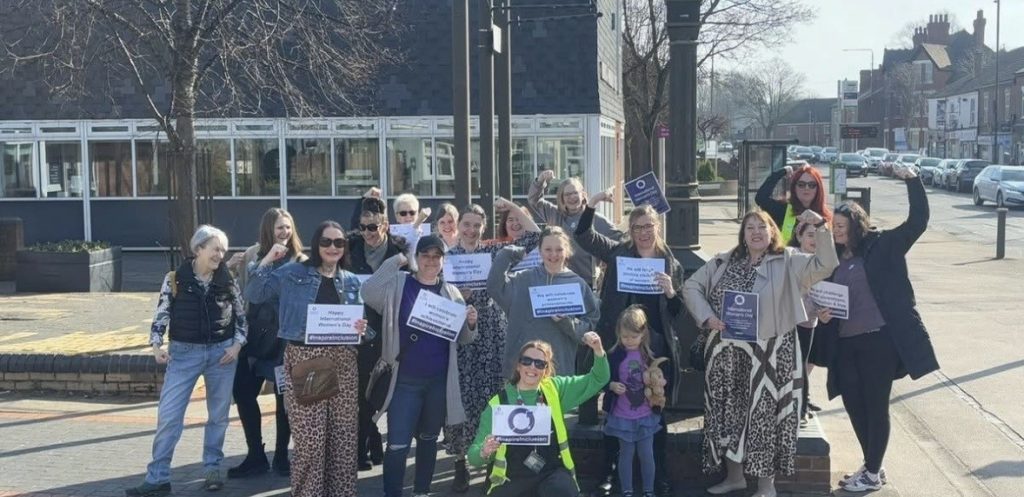
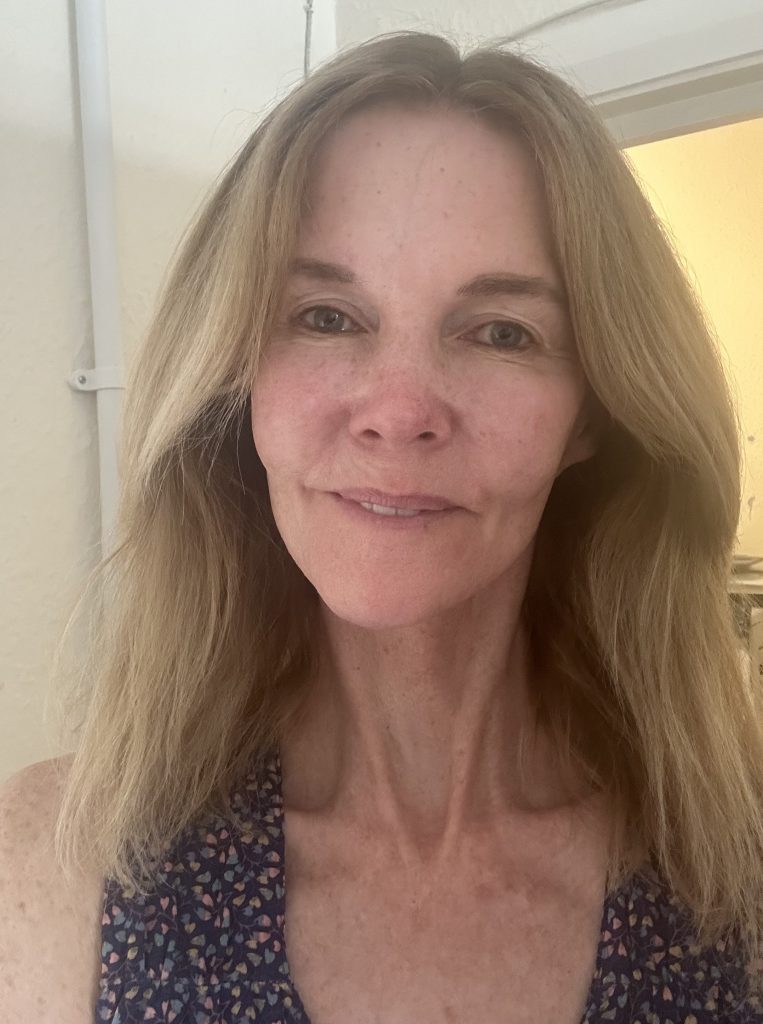
Welcome to Part 1 of our September 2026 Inspirational Interview with Sandra Reddish, Author and Outreach Worker at Broxtowe Women’s Project in the UK.
Sandra Reddish was a police officer for 30 years and spent her final few years on the Homicide Unit. Collecting exhibits at domestic postmortems where all of the victims were women was a sobering experience that made her want to do more to support domestic abuse survivors. She finds purpose in writing books and training others, often writing about the more subtle types of abuse that are excused and minimised by survivors. As a trained coach, she uses her skills to challenge different ways of thinking and encourage recovery and personal growth in a trauma-informed way.
Part 2 of Sandra’s interview will be published 14 September, 2026.
All pictures courtesy of Broxtowe Women’s Project.
 1. How and why did you join the movement to end violence against women (VAW)?
I believe VAW is one of the most damaging issues affecting society as a whole. Its impact reaches beyond individual women, affecting children, families, men, the economy and communities. When a society allows abuse to become normalised or tolerated, we all pay the price.
As an outreach worker I became increasingly frustrated that supporting women one at a time, although vital, could only go so far. I realised that I could write books, run courses and train facilitators, and that this gave me the opportunity to reach a wider audience and make a bigger difference.
Writing has allowed me to share what I have learned, challenge attitudes towards abuse and give survivors practical tools to understand and overcome its impact. I want to make my courses accessible to as many women as possible so that no woman needs to suffer alone and unsupported.
2. You are an outreach worker at Broxtowe Women’s Project’s (BWP), a domestic violence charity in Nottingham. Could you tell us about BWP’s approach to combatting VAW and how this has developed since the organisation was founded 25 years ago?
BWP is a very small charity, but our approach is to make sure no woman is turned away without support. We provide one-to-one outreach support to women in our local borough, as well as support for children affected by domestic abuse.
We recognise that survivors can experience isolation and loneliness, so we also offer wellbeing sessions such as creative writing and craft groups, helping women rebuild confidence and connections.
Over the last 25 years, our approach has developed as we have looked for new ways to reach survivors. Delivering courses via Zoom has enabled us to support women wherever they live, making our courses much more accessible.
As a small charity, we have always had to be creative and innovative. We are leaders rather than followers, and our future plans are to extend our reach and train others to deliver our courses, so that more survivors can benefit from our expertise.
3. Could you tell us about the services, programmes, and initiatives that BWP runs to support victims of domestic violence in Nottingham?
Our work is not just limited to Nottingham: many of our courses are run via Zoom and can be accessed worldwide. Women have joined our courses from France and the US.
The Survivors Programme via Zoom is a 12-week course about domestic abuse in intimate relationships. It covers the main methods of abuse with a view to educating, destigmatising and validating survivors’ experiences. Disclosure is encouraged and women generally feel huge relief and validation from others having disclosed their experiences of abuse. They also say they feel less isolated knowing others share their experiences.
The post-separation abuse (PSA) course is a 6-week Zoom course dealing with PSA, a very under-acknowledged issue. As well as educating survivors, it gives practical advice and guidance, and also encourages survivors to challenge their mindsets to better deal with this form of abuse which can be relentless.
We also run extremely popular creative writing groups.
4. What are some of the particular challenges that you have faced and continue to face in the course of your work as an outreach worker for BWP?
One of our biggest challenges is funding. There is increasing competition for a shrinking pot of funding, and many small charities are struggling to survive. With more unrestricted funding, we could invest in better marketing and reach more survivors.
As a small charity, we are constantly having to do more with less because funding constraints also mean we remain a small organisation, with around 10 staff, most of whom work part-time. Despite this, we achieve a huge amount with the limited staff hours we have.
Another challenge is the lack of understanding of domestic abuse among some professionals who should know better. Survivors can still be let down by social care, health professionals and schools because of this lack of understanding. We try to address this by providing training to professionals, helping them recognise abuse and respond to survivors more effectively.
5. Over the years, what sort of impact has BWP’s work had on stopping VAW in Nottingham and beyond?
- One-to-one outreach: We support survivors to stay safe, leave abusive relationships, relocate, access refuge and essential services, and deal with the practical and emotional impact of abuse. Being listened to, believed, and understood can help women regain confidence, safety and control. We also offer free counselling.
- Support for children: Children affected by domestic abuse are given a safe space to talk about their experiences, understand that the abuse is not their fault, and develop healthier ways of coping.
- Courses and education: Thousands of women have accessed our courses, gaining a better understanding of domestic abuse, coercive control, trauma, and healthy relationships. This can help women recognise abuse, make informed choices, and rebuild their lives.
- Wider impact: Through our books, courses, and outreach, we reach women beyond Nottinghamshire and help improve understanding of VAW.