
As part of The Pixel Project’s Read For Pixels campaign, we interview authors and poets from genres as diverse as Science Fiction and Fantasy to Romance to Horror about why they support the movement to end violence against women and girls.
To kick off Women’s History Month 2026 and just ahead of the 10th annual International Women’s Day Edition of The Pixel Project’s long-running Read For Pixels campaign, we present an interview with Read For Pixels author Kristy P. Kulski.
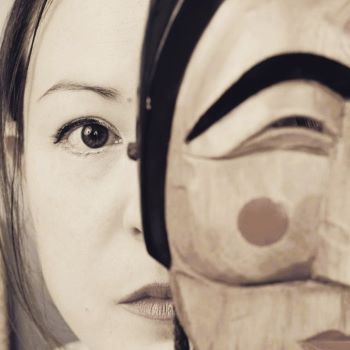
Kristy Park Kulski is a Bram Stoker Award nominated Korean-American author, historian, and maven of beautiful horrors. Her tales are often sorrowful and haunting, usually with a dash of history. Born in Hawaii, she’s from all the places in the U.S., but now resides in a wooded corner of Northeast Ohio.
Inspired to support The Pixel Project’s anti-violence against women work? Make a donation to us today OR buy our 1st poetry collection, UNDER HER EYE, that is published in partnership with Black Spot Books. All donations and net proceeds from book sales go towards supporting our campaigns, programmes, and initiatives.
1. Why is ending violence against women important to you?
The violence women face—the threats and fears—are pervasive internationally. The degrees vary as do legal protections, but all women know what it’s like to look over their shoulder and to fear potential violence from partners. My mother’s story of immigration from South Korea to the United States is a heartbreaking example of how much domestic violence has become entrenched in male culture all over the world. She suffered significant domestic violence in Korea during the 1970s, only to immigrate to the United States and experience it again at the hands of my white American father. There are many other instances of violence touching my life, but I will not talk about each of them. Some are too painful; some are not my story to tell. And I know I am not the only woman to have such stories. So, this work is important to me because it’s personal, and it’s personal for countless others as well.
2. Why do you support The Pixel Project’s anti-violence against women work?
I especially appreciate The Pixel Project’s international focus. This kind of engagement raises awareness and challenges notions of cultural acceptance of violence against women. By focusing on outreach via the internet and through popular culture, The Pixel Project reaches people where they already are and leverages the power of the written word to exchange ideas. This can be an unseen strength that blossoms in women and society. The Pixel Project deeply understands how storytelling can truly change the world.
3. What do you think editors should always keep in mind when editing stories that include violence against women?
In popular fiction of the past there have been many depictions of women experiencing sexual and physical violence as well as coercive control throughout books and film. Frequently the portrayal is voyeuristic and problematic. While we should not shy away from the topic, we can be much more deliberate and careful as creatives. I think the trend of including trigger warnings is one great way. Creatives should also ask ourselves what purpose does a depiction like this serve? Furthermore, ask ourselves, do we need to actively show the reader/viewer the moments of violence, or will it be just as effective to refer to it? Are we also discussing the impact, not only on the victim but on everyone?
4. What do you think authors can do to help with the cultural change needed to stop violence against women and girls?
Authors need to address it head on. We need to talk about it, as well as discuss it in our work (mindfully, as mentioned above). More than anything, we need to show the effect on women, children, families, and society at large. There is a quote that has always stuck with me. It is from the book Incidents in the Life of a Slave Girl, written in 1861 by the formerly enslaved woman Harriet Jacobs: “…slavery is a curse to the whites as well as the blacks. It makes white fathers cruel and sensual; the sons violent and licentious; it contaminates the daughters, and makes the wives wretched.” The sins of a society are a curse to everyone. We are all impacted by it whether or not we have experienced it personally. It touches every one of us. Be sure our work discusses how these sins reverberate and pollute the very fabric of family and society.
5. Any final thoughts about why everyone should support stopping violence against women?
If you haven’t experienced it yourself, I guarantee you know someone who has. You’ve passed her on the street, held her hand, or laughed together at a family get-together. If you’ve committed violence like this, I urge you to get help. Reform from being the villain of the story to someone who can contribute to change by working on yourself. Men, talk to one another. Don’t accept behaviour that promotes a culture of hurting women. Speak up. We are all in this together.