

Across the globe, art has long served as a powerful medium for resistance, healing, and community transformation. In the fight to end violence against women and girls, feminist art collectives are reclaiming this tradition and turning public walls, digital canvases and gallery spaces into platforms for truth-telling, solidarity, and urgent action.
More than just art, these collectives create spaces for survival and reimagining a world where gender equity is not just a vision but a lived, collective reality. Their stories serve as a clarion call to all of us: to listen, to witness and, most importantly, to act. Ending violence against women is not a singular effort, but a shared commitment and these artists remind us that culture is not only reflective of society, but also one of its most potent instruments for transformation.
This curated list features 16 art collectives that confront gender-based violence with creativity, courage, and collaboration. From the trans-affirming murals of India’s Aravani Art Project to the street interventions of Mexico’s PasteUp Morras, these initiatives push boundaries, blending artistic expression with activism to amplify marginalised voices and demand systemic change. Whether through digital storytelling, urban graffiti feminist exhibitions, or community workshops, their work is as diverse as it is uncompromising. We hope you will use this list as a starting point for learning more about the power of art and art collectives as an integral part of the movement to end violence against women and girls.
Written by Anushia Kandasivam. Research by Anushia Kandasivam, Sharmila Ganapathy and Rubina Singh.
Inspired to support The Pixel Project’s anti-violence against women work? Make a donation to us today OR buy our 1st poetry collection, Under Her Eye. All donations and net proceeds from book sales go towards supporting our campaigns, programmes, and initiatives.
Art Collective Against VAW #1: Aravani Art Project – India
 The Aravani Art Project is an art collective based in Bangalore, India that is jointly led by trans and cis women. Founded by artist Poornima Sukumar in 2016, the collective focuses on reclaiming public spaces for women and actively addresses violence against transgender individuals and cis women. Artists in the collective use murals and artistic interventions as a form of resistance and to reshape narratives and create visibility and inclusion for transgender individuals and cis-women, facilitating conversations and debate surrounding gender and social identities. The collective also serves as a safe space for transgender individuals and cis women from backgrounds where opportunities are scarce, enabling them to explore their creativity and earn recognition as professional artists, and to find financial stability and a sense of purpose and belonging.
Art Collective Against VAW #2: Digitálias – Portugal
 Digitálias is a women-led art collective dedicated to addressing gender violence through co-creative digital art and transmedia projects. Since 2018, they have beem collaborating with Associação Ser Mulher (ASM) in Portugal, organising art labs for women who have experienced intimate partner violence and are living in shelter homes. Digitálias’ work focuses on empowerment, self-esteem, and identity-building through participatory artistic practices, using digital and multimedia art. Their projects emphasise gender equality and intersectionality and align with broader European Union gender equality strategies.
Art Collective Against VAW #3: Guerrilla Girls – United States of America
 The Guerrilla Girls is an anonymous feminist art collective founded in 1985 in New York City. They are best known for their provocative and humorous campaigns that expose gender and racial inequalities in the art world and beyond. The group uses posters, billboards, books and public performances, often targeting museums, galleries and cultural institutions, to “maintain pressure on art institutions and professionals to be mindful of issues of sexism and racism.” They have consistently highlighted the underrepresentation of women and artists of colour in the art world, using data-driven approaches to expose disparities and critique the male-dominated art establishment.
Art Collective Against VAW #4: InFems – United Kingdom
 Founded in 2020, InFems is an all-woman art collective that aims to empower women and girls from diverse backgrounds to share their stories through art and create a dialogue around the importance of women having a voice, especially in a climate in which women’s bodily autonomy is under threat. Its projects and exhibitions all contain a feminist theme, such as the Lost Girls exhibition, which showed the profound challenges facing women and girls affected by war, and a collaboration with designer Carolina Herrera in honour of International Women’s Day to create a collection exploring the theme of feminine mythology, self-love, identity, and representation.
Art Collective Against VAW #5: Kasibulan – The Philippines
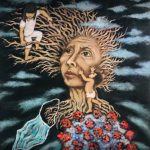 Founded in 1987 by pioneering Filipina artists Imelda Cajipe‑Endaya, Julie Lluch, Brenda Fajardo, Anna Fer, and Sister Ida Bugayong, Kasibulan’s objectives are to provide a sisterhood space; challenge patriarchal art norms; provide opportunities for creativity, growth and self-sufficiency; connect women across artists communities; and “give voice to the voiceless”. Kasibulan–short for Kababaihan sa Sining at Bagong Sibol na Kamalayan (Women in Art and Emerging Consciousness)–actively foregrounds women’s issues in its exhibitions, workshops, and community engagements, such as: its show challenging class and gender hierarchies spotlighting Filipina migrant workers; the “Tahi‑Tagning Pagsibol” exhibit focused on women’s healing, livelihood, and trauma recovery from the pandemic; and the “Pamumulaklak” discussion series addressing marginalised women’s struggles and ecofeminism.
Art Collective Against VAW #6: Las Sabinas – Mexico
 Las Sabinas is a collective of young feminist ‘artivists’ from Mexico City and its outskirts. They aim to raise awareness of and bring an end to sexual violence through painting, graffiti and murals, and keep the issue of sexual violence in the spotlight and spark community conversations. The collective’s name is inspired by the Ancient Roman story of the rape of the Sabine women who were kidnapped by Romans and forced into marriage but were later instrumental in stopping violence between the two warring peoples. Las Sabinas wants to rethink the justice system in a way that prioritises the healing of survivors, instead of re-victimising them: “We want to talk about sexual violence in a way that allows us to understand reparations from a human rights perspective and to access other forms of justice that have been devalued by a patriarchal and exploitative system.”
Art Collective Against VAW #7: Mujeres en las Artes – Honduras
 Mujeres en las Artes (MUA) is a women-led art collective, uses drama and visual arts to start conversations around gender-based violence in Honduras. MUA has worked with the UN on Spotlight Initiatives to engage young people in challenging the harmful gender norms that perpetuate gender-based violence and suggesting ways to end it, and to empower students and teachers to have conversations around sexual violence and reporting.
Art Collective Against VAW #8: Murale contro il Femminicidio – Italy
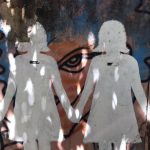 This initiative by Italian artists Marina Biagini and Elisa Caracciolo is centred specifically around a famous (or infamous) public memorial they created in 2012 in Rome which is dedicated to femicide victims in Italy. Working with community artists, Biagini and Caracciolo, known collectively as WaW Duo, started restoration works on the contemporary mural on International Women’s Day (8 March) this year. Murale contro il Femminicidio (Mural Against Femicide, 2012-13) is a tribute to the hundreds of women who died at the hands of men through domestic or other violence. WaW Duo were moved to create the mural by their outrage at patriarchal violence in Italy, choosing its location because of the crowds that pass by and its proximity to student and faculty communities at a nearby university: “We were looking for a way to represent the incredible number of women who were killed… When you are in front of the wall, you can see how [big] the problem is.”
Art Collective Against VAW #9: PasteUp Morras – Mexico
 PasteUp Morras is a feminist art collective founded in Mexico City in 2018. Composed entirely of women, the group uses paste-up techniques such as posters, illustrations, and typography adhered to public walls to reclaim urban space and challenge patriarchal norms. It uses art to address femicide and other gender-based violence, machismo and body autonomy, with posters often memorialising victims and calling out systemic failures. The collective’s use of busy public spaces is sometimes met with resistance from local residents but feminists see it as a “as a representation and a voice of all of us” as “urban art is a cry” and “impossible not to see”.
Art Collective Against VAW #10: SOHO20 Gallery – United States of America
 SOHO20 Gallery is a non-profit artist-run organisation founded by a group of women in New York City which has been promoting the work of women artists since 1973. It facilitates professional excellence in an industry lacking opportunities for women and uses its gallery as a voice for marginalised artists. The collective uses feminist exhibitions not just to drive its mission to end gender-based discrimination in the arts but also to start conversations around women’s rights and gender-based violence. One of its most recent exhibitions, My Body, My Choice!, is a group work reflective of the struggle for reproductive rights and freedom of choice, emphasising intergenerational dialogue and lived experience, including of minority women.
Art Collective Against VAW #11: The Art Project – Australia
 The Art Project is a short-term art collective initiative by Australia’s Centre Against Violence’s to “harness the transformative power of art” to raise critical awareness about violence and demonstrate the capacity for empowerment and recovery. This year-long project engaged a group of self-nominated survivors of gender-based violence and sexual assault to create a series of artworks to share their stories of trauma, pain, and healing with the local community. The Art Project also catalysed media coverage, bringing more awareness to the issue of gender-based violence and the Centre of Violence’s message of positive change further afield, with the project and studio “becoming a place for knowledge, for listening, for understanding, for comfort and compassion.”
Art Collective Against VAW #12: The NAMI Network – Brazil
 Rede Feminista de Arte Urbana, or the NAMI Network, is a feminist urban art collective based in Rio de Janeiro. The collective uses public art, especially graffiti, to empower women, educate communities, and challenge domestic and gender-based violence. Its work includes advocacy for marginalised groups, including Black, Indigenous, LGBTQ+ and disabled people. Since 2008, NAMI has run its pioneering Graffiti pelo Fim da Violência contra a Mulher (Graffiti to End Domestic Violence) campaign that uses graffiti as a communication tool to talk about taboo topics such as violence against women. The campaign aims to bring awareness and spread information about the various types of violence committed against women in the form of free workshops, which each end in the students creating a mural in a public space about the themes addressed to serve as a permanent message about resisting violence.
Art Collective Against VAW #13: The Nest Collective – Kenya
 The Nest Collective is a multidisciplinary art collective in Kenya founded in 2013 which works with the visual arts as well as film, music, fashion and literature. Its pioneering Strictly Silk programme is a dance party and multimedia project which centres around joy, safety and community for women and non-binary people of all origins, faiths, and generations. Strictly Silk was conceptualised to explore the creative capacities of the women in the Nest Collective, with the men supporting them, and to be a medium of artistic expression that would bring the collective’s insights on gender, identity, and safety in night-time public parties and hangouts to the people–women and non-binary people–who constantly have to avoid, survive, and mitigate harassment in most mainstream social engagements and nightlife.
Art Collective Against VAW #14: Tomorrow Girls Troop – Japan and Worldwide
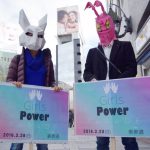 Tomorrow Girls Troop (TGT) is a 4th-wave feminist art collective founded in 2015. Based in Japan, the collective operates anonymously with members wearing rabbit masks symbolising women’s unseen labour and the cultural perception of the rabbit’s smart but powerless persona. TGT’s work uses several mediums, including public art, videos, photography, performances, and writing, to challenge societal norms and battle systemic misogyny. TGT led the 2015 campaign protesting against Shima city’s proposed oversexualised manga mascot, supported rape law reforms, and fought for a revised definition of “feminist” in Japan’s official dictionary. TGT has faced “constant backlash for advocating for the human right to live however women please…” but continues to “keep feminist issues in the conversation wherever and whenever they can”.
Art Collective Against VAW #15: Womanifesto – Thailand and Worldwide
 Womanifesto is an international biannual, artist-initiated art exchange programme based in Thailand that focuses on the work of women artists from around the world. The initiative aims to foster connections among artists, promote gender equity, and engage with both urban and rural communities through art. Womanifesto offers artists a way to challenge feminist, nation-centric, and region-centric narratives of art history. Its programme focuses on the position of women and their wealth of stored generational knowledge and aims to equally share it with local and international communities. Its exhibitions feature feminist art exploring gender, identity, and traditional crafts and knowledge.
Art Collective Against VAW #16: Wona Collective – Malawi
 Wona Collective is a women-led art collective in Malawi. Its vision is to document stories by Malawians for Malawians, particularly the ones about women and marginalised groups that are often untold or erased. The collective works with artists in a range of media to amplify local voices, provide a platform to speak and connect, and bring art, literature and literacy to schools, especially to girls. One of its biggest projects brought together 16 women poets to write about “the real, raw effect that sexual violence has on survivors and communities of women”.
The top picture is a Creative Commons images:
- Photo by Steve Johnson from Pexels
Additional Photo Credits
- Kasibulan – “Salinlahi’y Iligtas” by Imelda Cajipe-Endaya. Photo from Tatler Asia.
- Murale contro il Femminicidio – From Facebook
- The Art Project – From The Art Project 2023
- Tomorrow Girls Troop – From Dazed Digital